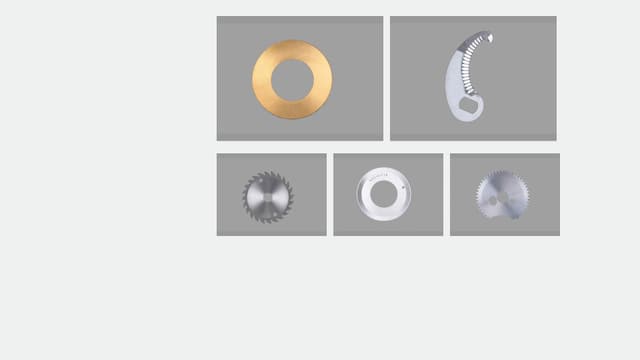
Custom Machine Knives: More Than the Outline
Fit and cutting performance depend on dimensions, edge, material and use.
Four things to confirm before a quote
With these clear, quoting and sampling have something solid to work from.
Machine fit
Datums, hole pattern, thickness, clearance and mounting direction. The knife has to fit first.
Drawing or old blade
Give the drawing revision. An old blade may be worn or reground, so its measured size may not match the original drawing.
Cutting conditions
Material, thickness, cutting motion and the problem you see now. Edge and blade material are chosen from these.
Acceptance
How the sample will be judged. Once approved, the drawing number, specification and inspection requirements are fixed for repeat orders.
Three details often missed when copying a used knife
Why not manufacture directly from the measured dimensions?
A used knife may be worn, distorted or repeatedly reground. Unworn features, installation space and the original drawing help establish the intended dimensions.
Which dimensions matter most for machine fit?
Focus on datums, hole pattern, thickness, clearance, mounting direction and adjacent components. Complex profiles also require a clear distinction between mounting and cutting faces.
How do repeat orders stay consistent?
After sample approval, retain the drawing number, critical dimensions, material, hardness, edge geometry and inspection requirements. Create a new revision if the operating conditions change.
Material, hardness, tolerances, edge geometry, price and lead time are confirmed after project review.